
August 2024 Garden Update

Summer is coming to a close, which means it’s time to take a step back and reflect on how the garden has grown as we prepare to transition into Fall and Winter. This growing season has been a mix of successes and challenges, and I want to share what’s been happening this year.


Tomatoes and Squash - Leading the Pack
The crookneck squash has been the star of the show so far this year - we’re being overrun with squash and we only have one plant! We planted this one as a start from a local nursery and all but forgot about it while we were working on other projects throughout the summer. The next thing we knew the plant was four feet across and putting on lots of tiny baby squashes. The first mature squash came on about the first of August and we’ve been harvesting at least two fully-grown crook-necks a day since then.
Unfortunately, the zucchini hasn’t been near as successful - we’ve only gotten a meager two zucchinis so far which is likely due to being overly shaded by a nearby butterfly bush that’s severely in need of a trim - maybe I’ll get to that this weekend, or maybe I’ll just take the loss and leave it alone for this year.
The tomatoes are growing like crazy, and it’s becoming clear that I’ll need to set up some trellises soon to support their weight. They’ve really taken off, and it’s satisfying to see such vigorous growth. We don’t have much fruit setting yet (we were behind on our seed starting dates because of the babies being born) but lots of flowers and very healthy looking plants. At this point we are in a race between fruit setting and ripening and the rainy/cold season that is not much more than a month away. We’ve been growing tomatoes longer than anything else and have the best idea of what we “like” and what we “don’t like”. This year we have quite a few different varieties, each selected for a different specific purpose.
These are the bulk of tomato crop this year. We eat a lot of canned whole/ & sliced tomatoes through the winter and I can’t stand store bought or industrial canned tomatoes. In our experience, peeling tomatoes is the most time consuming part of the canning process so the bigger tomatoes, the less peeling you do for each pound of fruit. We haven’t grown this specific variety before, but the beefsteak and Supersteak are are supposed to be huge. I guess we’ll soon find out!
We planted a about a half-dozen early girls which only take about 60 days to mature (compared to the usual 80-90 days for the other varieties). I planted these this year because we got such a late start, I’m trying to hedge my bets in case the beefsteaks don’t ripen before our weather turns.
This is a new one for us this year. Supposedly these can keep for 6-12 weeks under optimal conditions. The idea with these ones was to plant a few of them in the greenhouse and use row covers to get a moderate season extension up to mid-November. If we can figure out the storage technique we could conceivably eating fresh tomatoes into February before we even need to crack open the cans. Of course, this is a lofty goal and it’s likely that we won’t pull it off this year, but trying and failing is the first step towards succeeding!
These are moderately-sized and should mature slightly before the beefsteak and supersteaks. These are mainly targeted at slicing and fresh eating, but if we end up with extras they’ll give us a good head start on the canning.
Various cherry / munching varieties
In our family we love to much on fresh cherry tomatoes. This year we’re doing a couple different varieties, mostly just leftover seeds from previous years.
Green Doctor - Watch out for these tricky buggers! They are incredibly sweet but never turn red. The first time we grew these we got the seeds mixed up and didn’t realize we had planted these in with what were supposed to be the canning tomatoes. We couldn’t figure out why the plants were dropping green fruit. Turns out they were completely ripe and ready to eat!
Black Strawberry - These are a beautiful looking cherry-sized tomato with deep purple hues. These are more for fun than anything else, but do make for a great snack while working in the garden.


Leafy Greens - A Mixed Bag
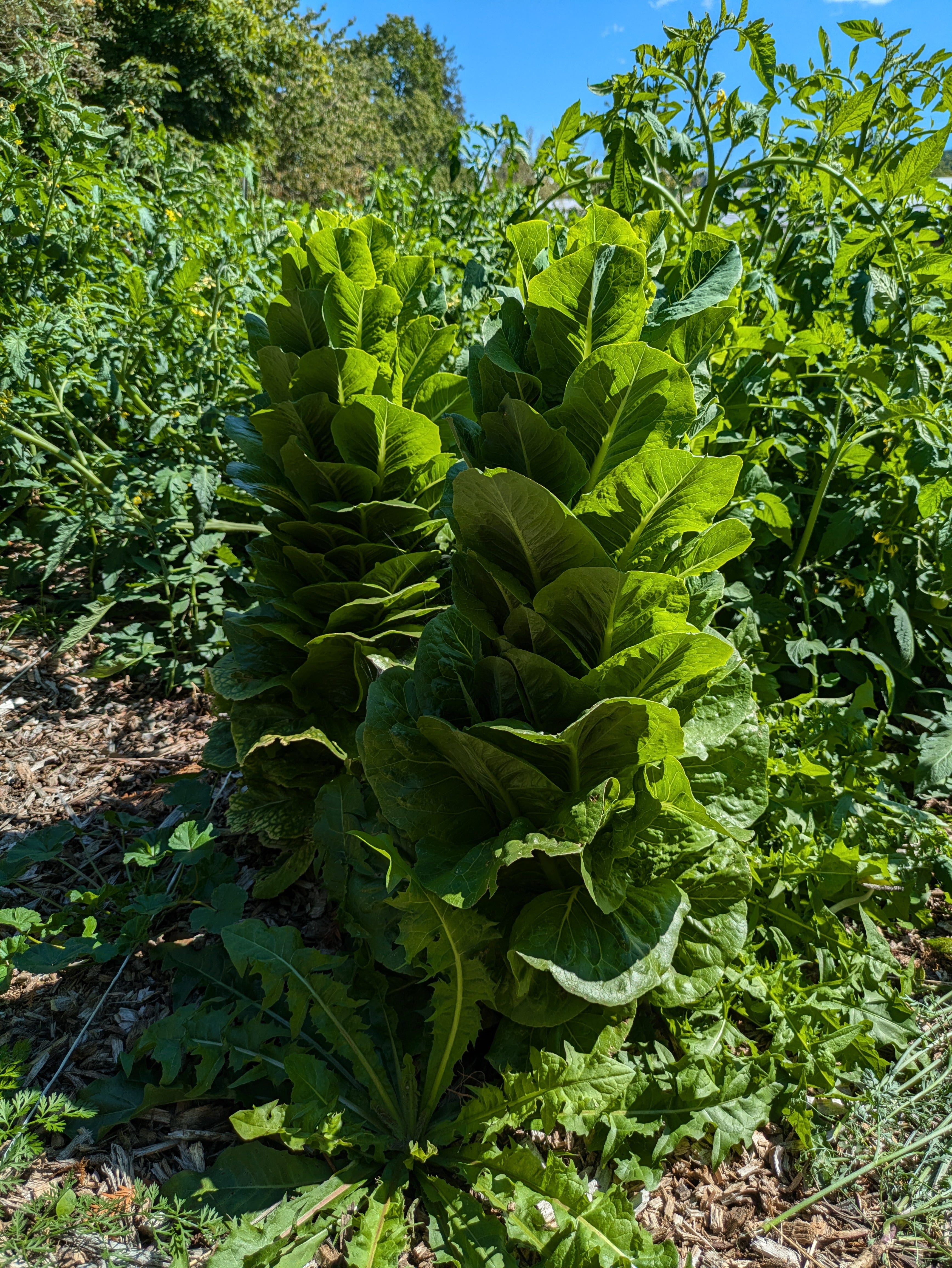
Let’s start with the good news: the lettuce has been thriving. We’ve harvested more than enough through late-spring and early-summer and am just about to sow another succession planting in the next week as part of our winter garden plan. The major heatwave we had about a month ago really stressed all of our lettuce in the ground and it turned bitter in a hurry and now most of the plants are bolting. I plan to save off a few seeds for next year but will be feeding the bulk of these to the chickens.
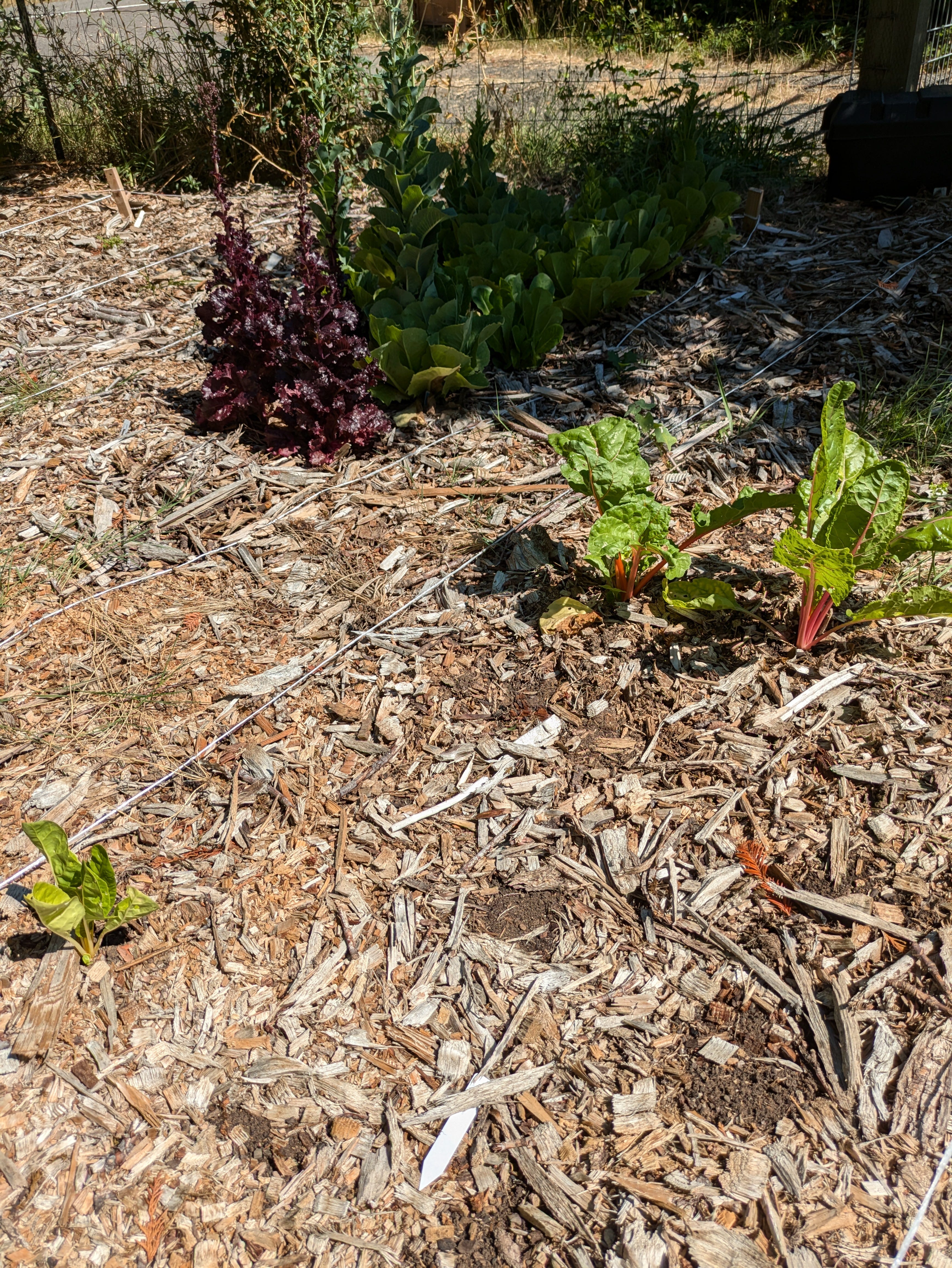
This spring was our first try at growing kale and chard (mainly as a snack for the chickens) but our attempt was largely unsuccessful. Both crops were direct-sown into our Back-to-Eden garden bed. I did two plantings of Kale and neither germinated, which makes me question the seeds that we were using. The chard fared a bit better and we got a meager harvest, but nothing to write home about. I think it might be another place where our sun exposure wasn’t ideal. I’ll be sowing both of those again along with the lettuce for our winter garden, and we’ll see if they perform better in the cooler fall weather.
Corn & Cucumbers - We’ll be Buying from the Market this Year
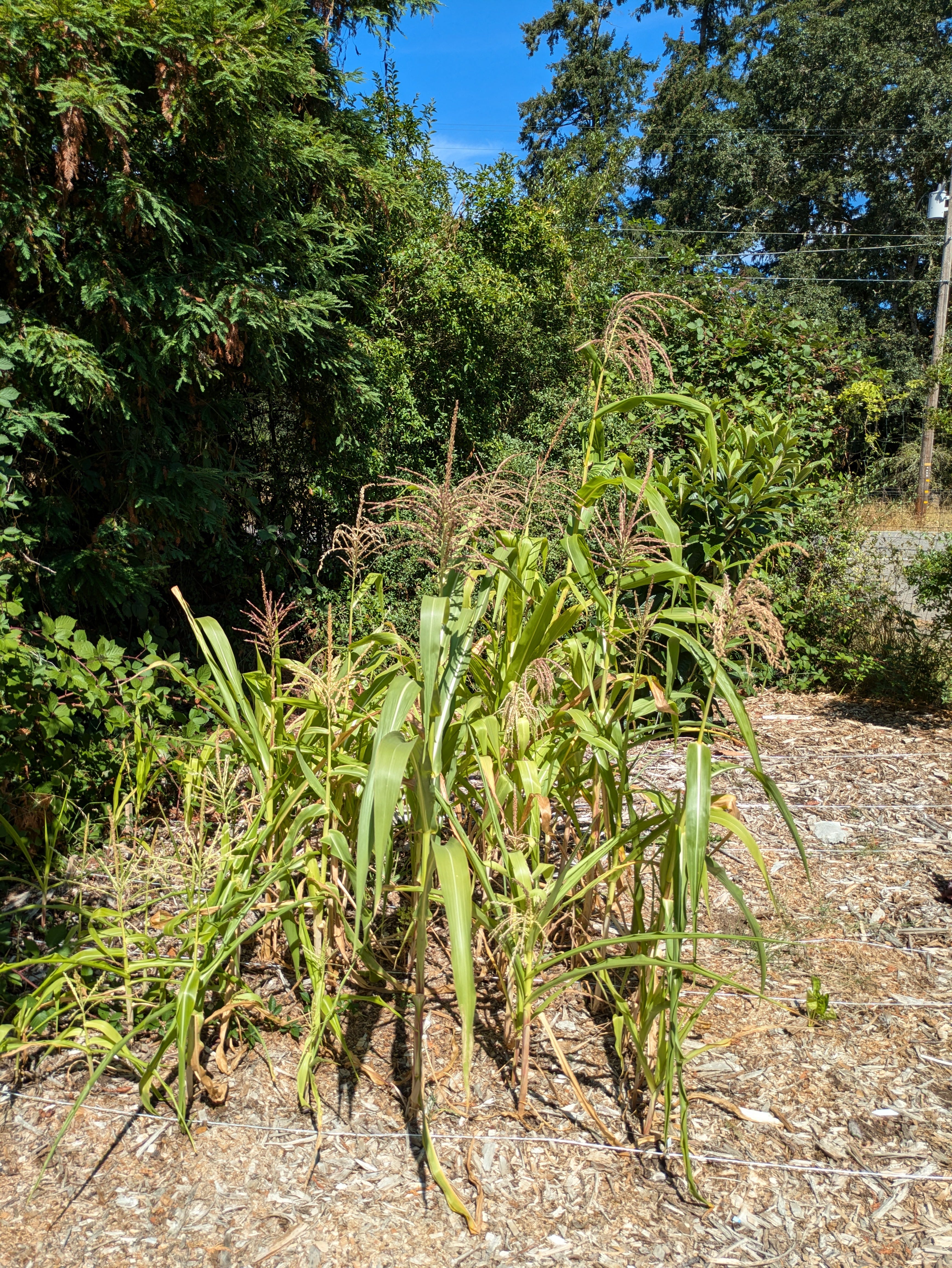
The corn in our garden this year has largely been a flop. The plants are tall and they are maturing well, but the stalks are thinner than expected and have very few ears that have set. I have two theories on this at the moment: 1 - I planted them too close together, and/or 2 - They’re not getting enough sunlight due to shading from the nearby trees. I don’t think this is an issue with the variety or seeds, since I planted another batch of these a few weeks ago out in our Mini-Beds-on-Plastic experimental garden and those plants are doing quite well. Those ones may not make it to maturity before the cold sets in though, so this year’s corn harvest may be a bust. At the very least, we’ll remember not to plant the corn in this spot next season. Fortunately for us, there a ton folks around here that grow good corn, and we’ll be able to buy it on the cheap once the harvest starts.
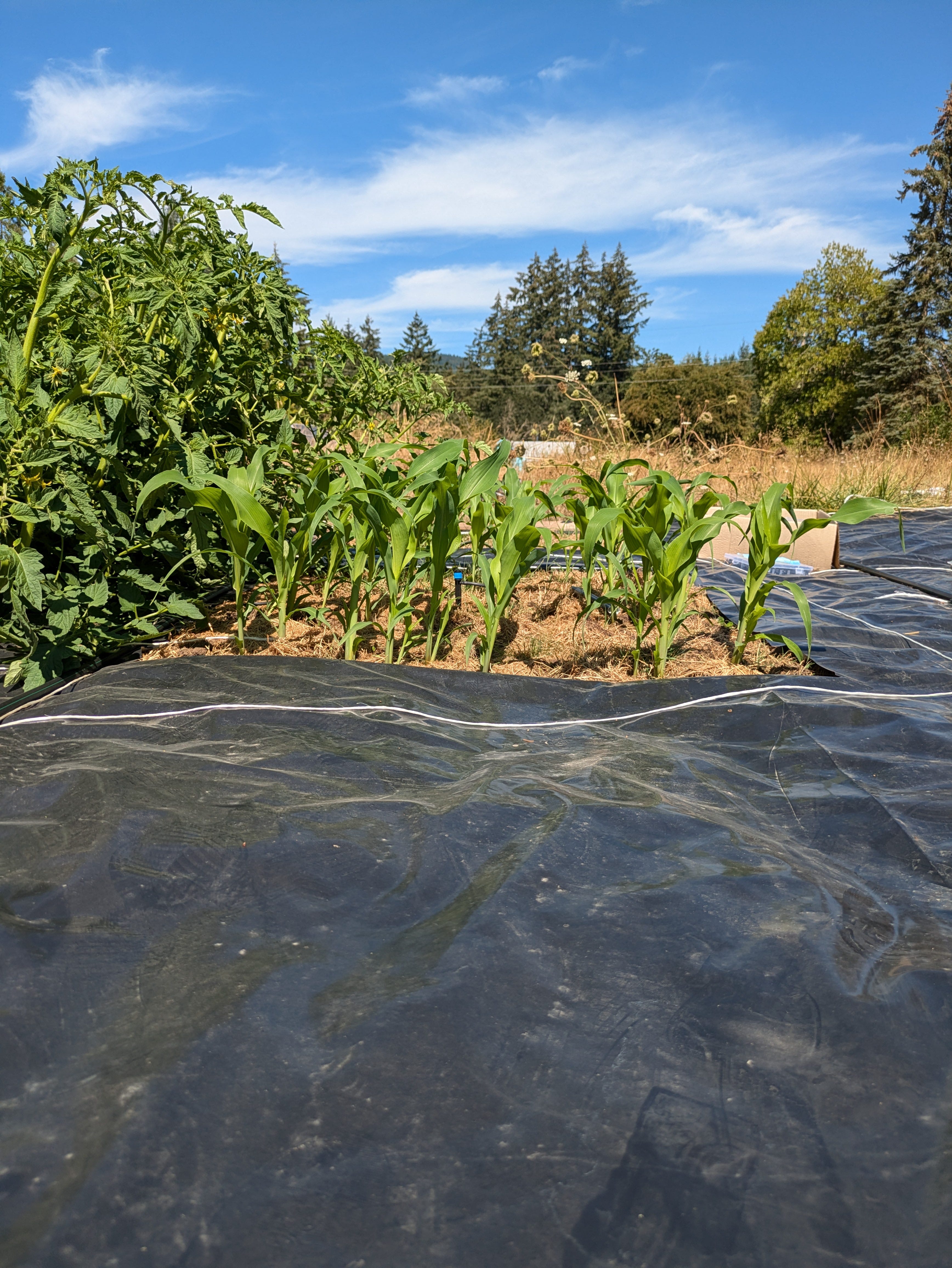
We had a similar experience this year with the cucumbers. They germinated great but withered and died very quickly after sprouting. I think this may have been a result of heavy slug pressure that we were experiencing shortly after the garden went in. I started another set of cucumbers in trays and transplanted to the Mini-Beds in mid-August. This will be another race against the weather to see if we get any veggies off of these plants. If not, we’ve learned a valuable lesson and will have some good green material for the chickens and the compost.
Orchard - Redeeming the Failed Spring Cherry Crop
We lost all of our cherries earlier this spring to the birds, just as they were ripening up and we were all getting excited to go out and pick them. This was a major downer, but we didn’t dwell on it much because we had so many other things going on (eg. babies). Now as we are getting to fall, the other half of the orchard has been putting on tons of good looking fruit and we are shaping up to have a reasonable harvest of apples (multiple interesting varieties), Asian pears, and figs. We’ve got a few more weeks before these will be ready, so hopefully the birds don’t strike again, but if they don’t then we’ll have lots of ingredients for pies, cobblers, and ciders!


Wrapping Up
We’ve been at this for about one year now, and our first full summer growing season is coming to a close. Gardening is always a learning process, and this year has been no exception. We have a lot of work ahead as we get into the full swing of harvesting the fall crops and prepare for another winter.
This year we’ll be trying our hand at a our first-ever winter garden, inspired by the Seedtime Winter Garden Challenge that wrapped up a few weeks ago. We have plans to try a few varieties of winter squash, broccoli, cabbages, lettuce, kale, and handful of others. The idea is that if done well, we can have our very own “produce aisle in the field” that we can harvest fresh greens and various storage crops from so much further into the fall and winter than we had ever before even thought possible. We might not be wildly successful at everything we try this year, but if we don’t try anything then we are guaranteed to fail. Stay tuned to see how it goes!